


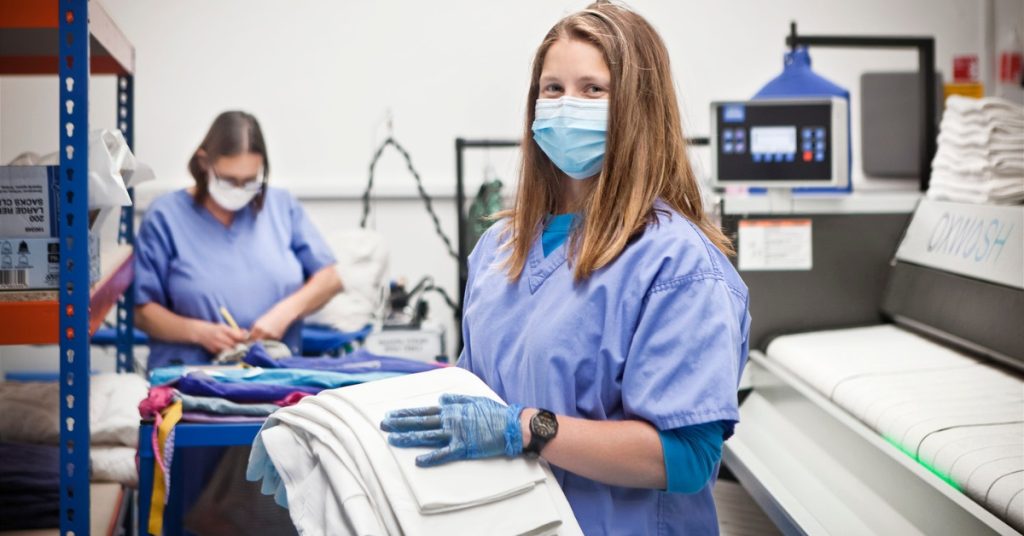


In the high-stakes world of healthcare, hospital linen services are more than just behind-the-scenes support—they’re critical to infection control and patient safety. Every sheet, gown, and towel must meet stringent hygiene requirements to prevent the spread of pathogens. But how do these linens go from soiled to sterile? It’s all thanks to science-driven processes, rigorous standards, and modern innovations that keep things cleaner than clean.
Let’s break down the layers of what really goes into hygienic linen processing.
1. Microbial Contaminants in Linens: The Unseen Health Hazard
Hospital linens can harbor a range of microbial contaminants long after they’ve been used. From patient contact to environmental exposure, fabrics absorb more than just moisture—they can carry infectious agents capable of spreading diseases throughout a facility.
Common Pathogens Found in Hospital Linens:
- Staphylococcus aureus – Commonly responsible for skin infections and more serious conditions like pneumonia.
- Escherichia coli (E. coli) – Linked to gastrointestinal infections and sepsis in severe cases.
- Clostridioides difficile (C. difficile) – A spore-forming bacterium known for causing life-threatening diarrhea.
- Norovirus – A hardy virus that spreads rapidly, especially in closed environments like hospitals.
These pathogens can survive on fabric surfaces for days, if not treated properly. This is why the microbial decontamination process is the foundation of any hospital linen service. Without thorough cleansing, linens can easily become vectors for hospital-acquired infections (HAIs).
Now that we understand what we’re up against, let’s explore how these invisible enemies are eliminated.
2. High-Heat Heroics: Proper Washing and Sanitization Methods
Disinfection is not a guessing game. The science of sanitization relies heavily on thermal and chemical precision. High heat, in particular, is a formidable ally in the war on germs.
Key Elements of Disinfection Protocols:
- Thermal Disinfection: Washing at temperatures of 160°F (71°C) for at least 25 minutes effectively destroys most bacteria and viruses.
- Chemical Boosters: Detergents are often infused with hydrogen peroxide or chlorine bleach to tackle resistant spores like C. difficile.
- Mechanical Agitation: The physical movement in industrial washers helps to dislodge particles and expose all areas of the fabric to disinfectants.
These elements are balanced to ensure efficacy without damaging the fabric, which brings us to the next point—ensuring that linens are not only clean, but strong enough to survive the process.
But how do we know that these linens are holding up under the pressure? Let’s take a closer look—literally.
3. Advanced Fabric Testing: Where Sterility Meets Strength
Clean isn’t just about killing germs—it’s also about textile integrity. Hospital linens are expected to endure hundreds of washing cycles while maintaining their functionality. To guarantee both sterility and durability, advanced testing methods are essential.
Common Quality Assurance Tests:
- Microbial Swab Testing: Post-wash testing for residual bacteria or spores ensures the process is working.
- Tensile Strength Tests: Measures the fabric’s ability to resist tearing or fraying over time.
- Chemical Residue Checks: Verifies that disinfectants are properly rinsed out, reducing risks of skin irritation.
- Colorfastness and Shrinkage Control: Ensures visual uniformity and fitting across all uses.
These assessments are crucial not just for patient comfort, but also for maintaining high standards across repeated sanitization cycles.
Once fabrics pass these rigorous tests, they’re ready to meet even tougher challenges—like legal compliance.
4. Healthcare Hygiene Compliance: Playing by the (Strict) Rules
Compliance in healthcare isn’t optional—it’s enforced. Hospital linen services must adhere to national and international hygiene regulations to operate legally and safely. Failure to comply can lead to infection outbreaks, lawsuits, or facility shutdowns.
Major Compliance Areas Include:
- OSHA and CDC Guidelines: Cover everything from handling soiled linens to disinfection temperatures and chemical use.
- Infection Control Protocols: Ensure linens are collected, stored, and transported in a manner that avoids cross-contamination.
- Staff Training: All laundry personnel must be trained in handling biohazardous materials and using protective equipment.
- Facility Zoning: Many laundry facilities use color-coded zones (dirty vs. clean areas) to prevent contamination crossover.
Meeting these standards isn’t just about ticking boxes—it’s about keeping every patient interaction safe from unseen microbial threats.
Of course, regulations evolve—so how are today’s linen services staying ahead of the curve? Enter smart tech.
5. Smart Tech and Clean Sheets: Innovations in Linen Processing
The future of hospital linen processing is smarter, greener, and more efficient. From automated washers to data-driven tracking, innovation is transforming this once-underappreciated sector into a tech-savvy powerhouse.
Game-Changing Advancements:
- RFID Linen Tracking: Microchips sewn into fabrics allow hospitals to monitor usage, lifespan, and cleaning cycles with pinpoint accuracy.
- IoT-Enabled Wash Systems: Internet-connected washers can self-adjust settings based on fabric type and contamination level.
- Eco-Friendly Disinfection: Ozone and UV light systems offer high-level disinfection without harsh chemicals or extreme heat.
- Predictive Maintenance Tools: Sensors monitor equipment performance, preventing downtime and ensuring continuous operation.
By embracing innovation, hospital linen services are not only improving hygiene but also reducing waste, water consumption, and energy use.
Clearly, modern linen processing is a blend of science, tech, and safety—so where does this all leave us?
Why It All Matters: The Bigger Picture of Linen Hygiene in Healthcare
At a glance, hospital linens may seem mundane—just sheets and gowns, right? But behind every crisp bedspread is a well-oiled, scientifically sound system designed to protect patients from invisible threats. From fighting off microbes with high heat to testing fabrics under a microscope, every step is intentional, regulated, and increasingly smart.
The evolution of hospital linen services proves that hygiene is more than a standard—it’s a science. And as patient safety continues to take center stage in healthcare, the spotlight on hygienic linen processing will only grow brighter.
Because sometimes, saving lives starts with a clean set of sheets.

